ConnecTD
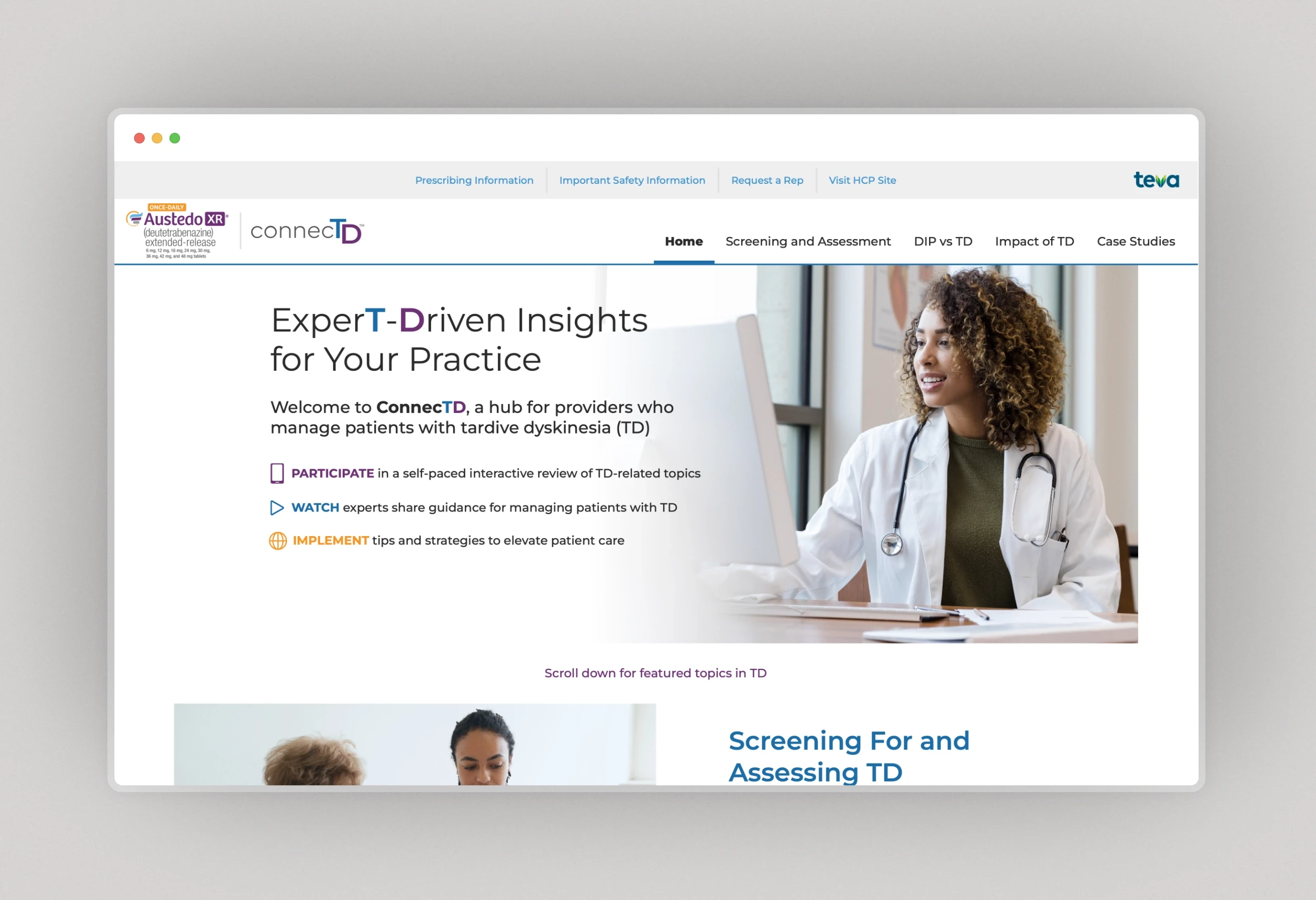
A hub for providers who manage patients with tardive dyskinesia (TD).


The short version
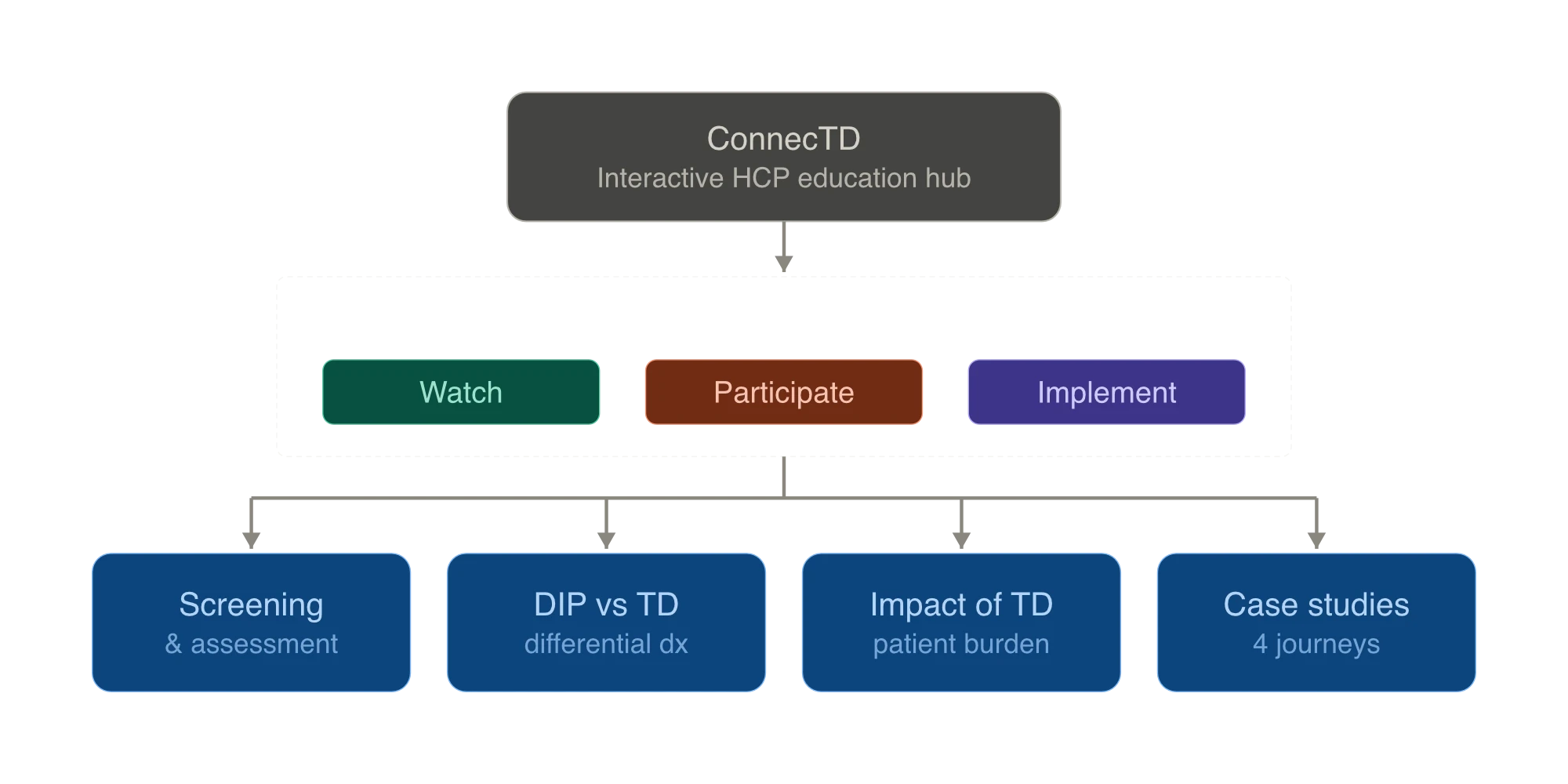
ConnecTD is Teva's online learning hub for clinicians who manage tardive dyskinesia (TD), a chronic movement disorder caused by long-term antipsychotic use. The brief: make dense, regulated clinical content something a busy provider actually wants to work through. The hub is built on a repeatable learning pattern and interactions designed for active practice, not passive reading.
The problem
TD is easy to miss and easy to mistreat. It hides behind conditions clinicians are already treating, it looks like a disorder that needs the opposite treatment, and assessing it properly requires a 12-item clinical exam most providers rarely run. Every screen also carries full prescribing information and a boxed warning.
The design problem: how do you get a time-pressed clinician to actually learn a differential diagnosis and a rating scale from a branded pharma property they're inclined to skim?
The approach
1. One repeatable pattern, applied four times. Every topic follows the same rhythm: watch a key opinion leader frame the issue, participate in a self-paced interactive, then implement it in practice. Four modules run that spine (Screening & Assessment, DIP vs TD, Impact of TD, Case Studies), each broken into short chapters with a summary. Learn the pattern once and every module that follows costs nothing to navigate.
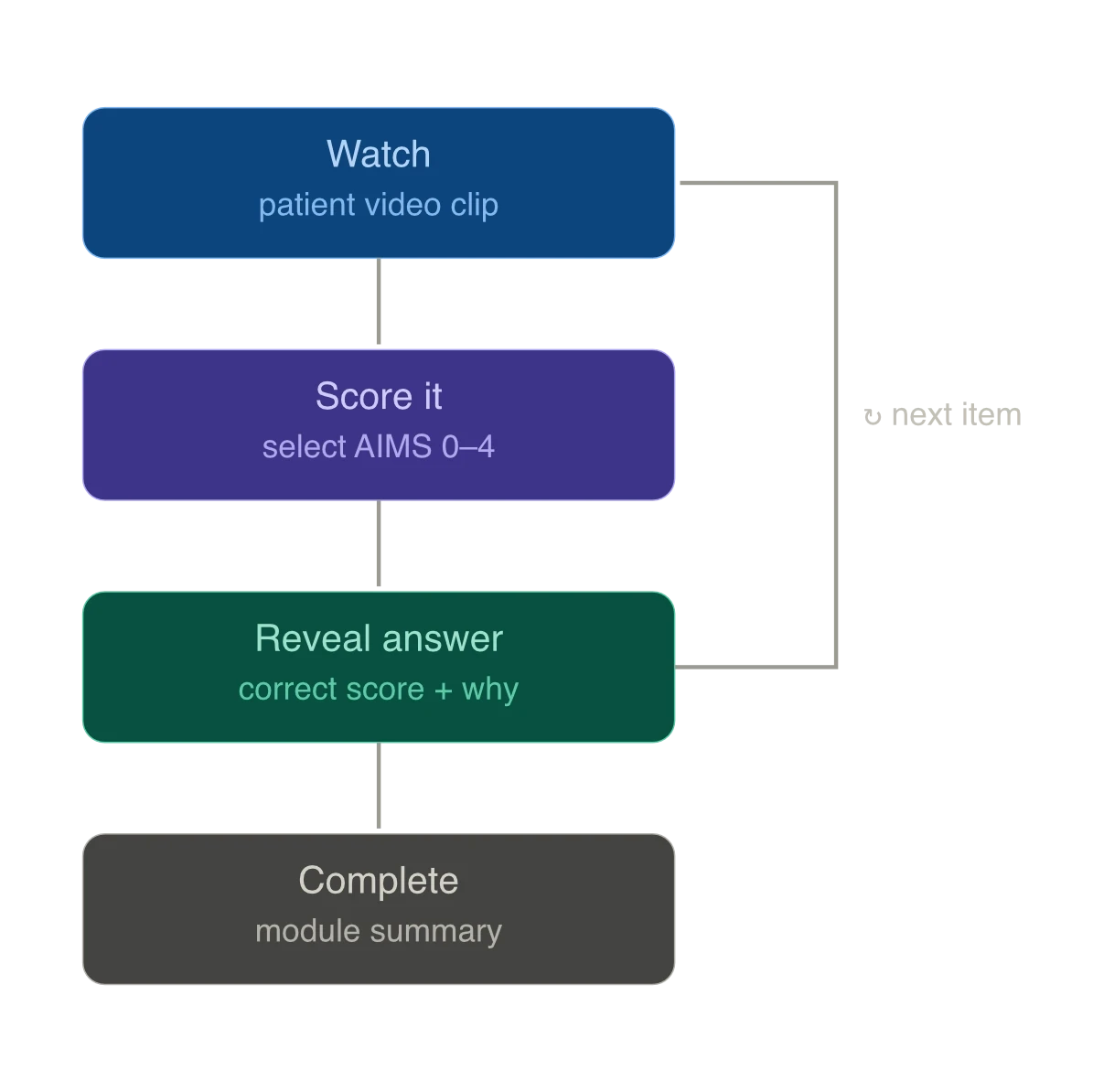
2. The AIMS exam, rebuilt as practice instead of reading. The Abnormal Involuntary Movement Scale is the clinical standard and the tool clinicians are least confident using. Rather than reproduce the PDF, the module builds practice: a 12-step exam where each step plays a video of the movement being assessed, an animated scorecard that walks through the 0-4 scoring logic item by item, and PerfecTD, a quiz where clinicians watch a real patient video, pick a score, then see the correct answer with rationale. Active calibration, not a download.
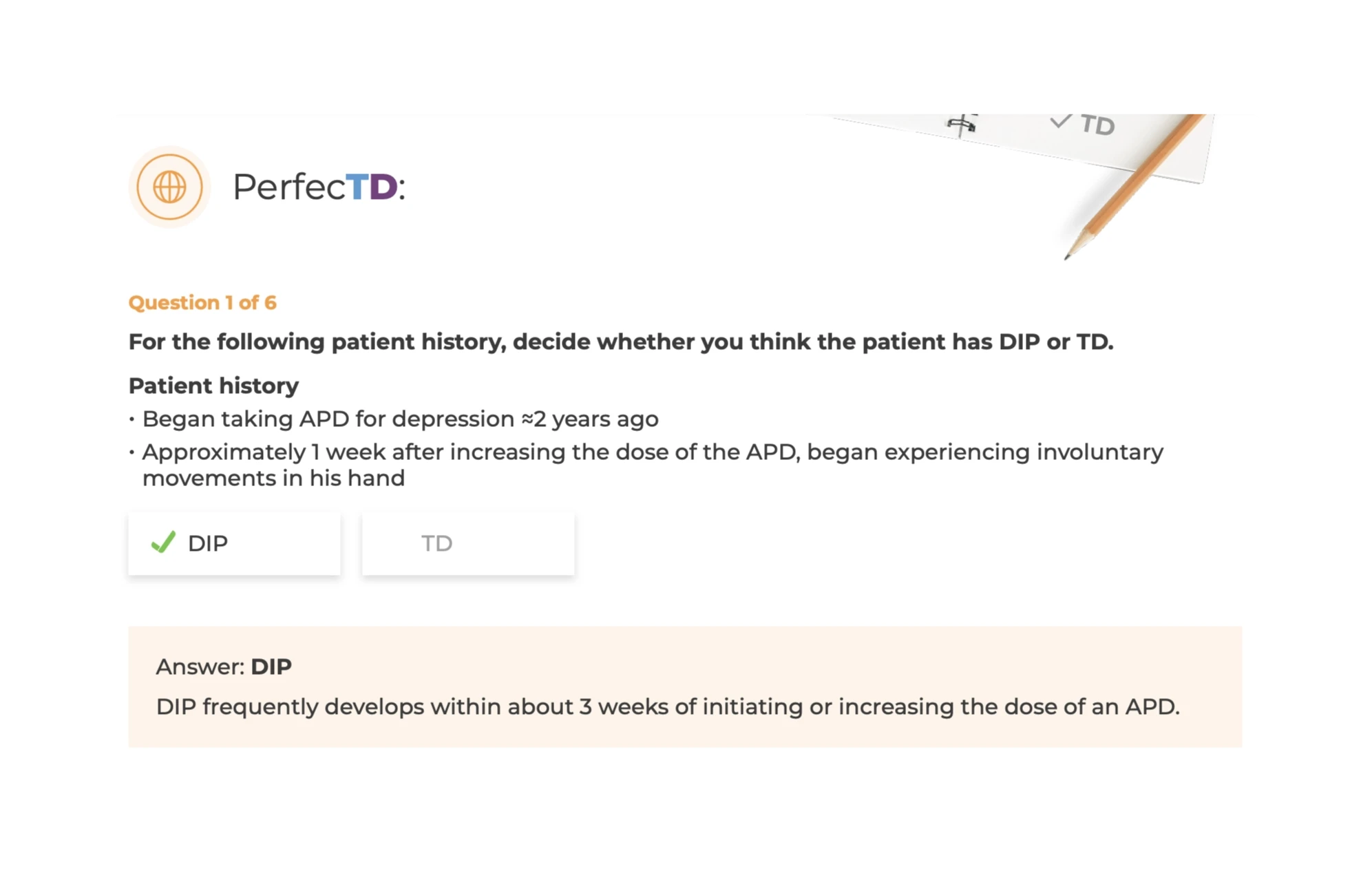
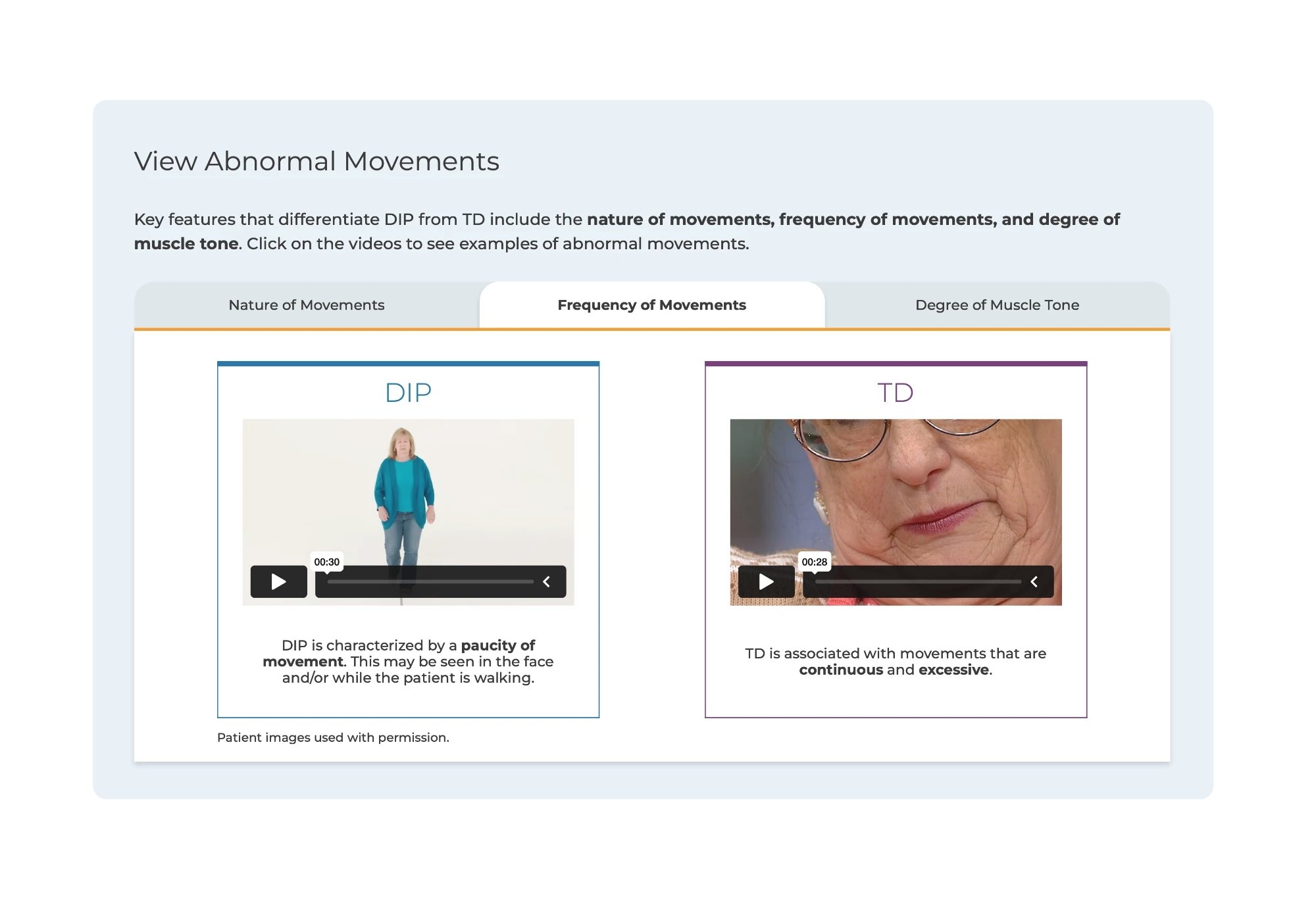
3. Seeing the difference, not reading it. Treating DIP can worsen TD, and vice versa. The Symptoms chapter makes the distinction interactive: a tabbed video player lets clinicians compare abnormal movements across Nature, Frequency, and Degree of Muscle Tone, switching between DIP and TD states. Watching the difference is faster and more memorable than reading it.
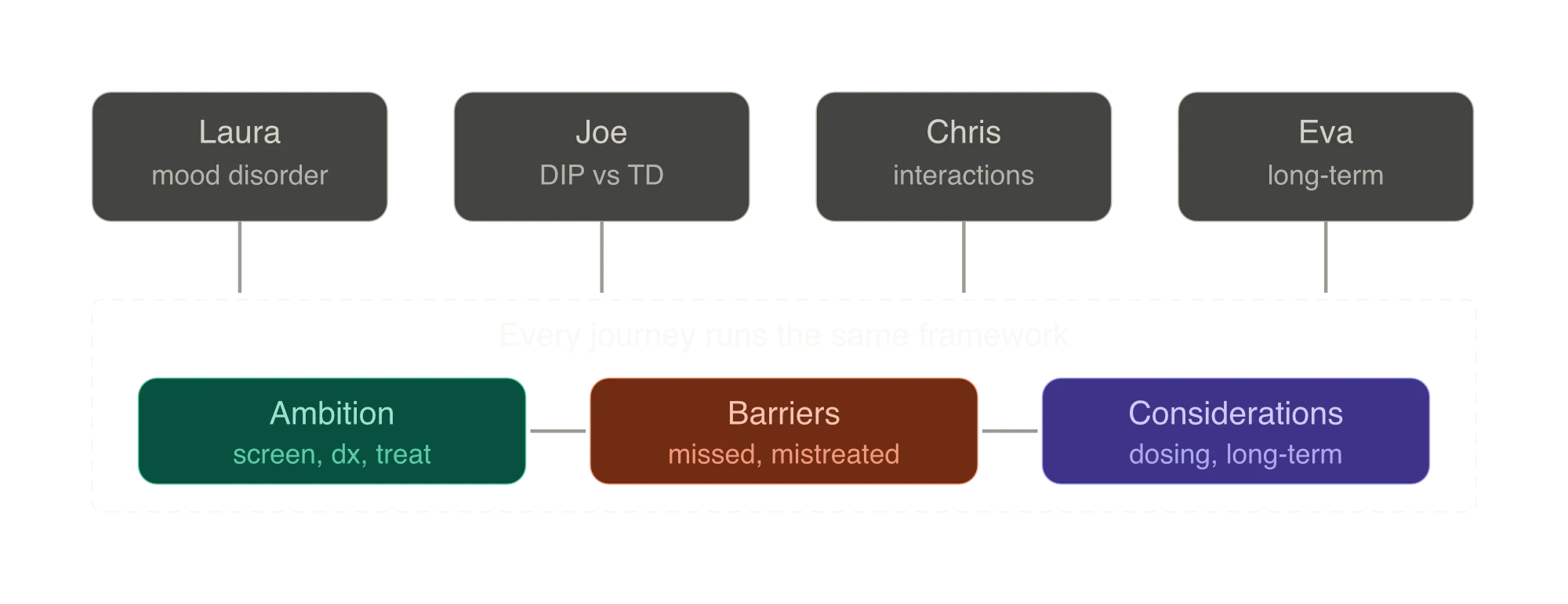
4. Four faces instead of four scenarios. Four patient journeys, four clinical wrinkles: Laura (mood disorder), Joe (DIP confusion), Chris (drug interactions), Eva (long-term care). Each runs the same decision spine, from Ambition through Potential Barriers to Treatment Considerations. The story carries the content. The framework makes it usable.
Why it works
Active recall over passive reading. The user scores, decides, and reveals, instead of scrolling.
One mental model. The watch/participate/implement pattern means no module has a learning curve of its own.
Credibility without lecture. Expert video does the persuading; the interactions do the teaching.
Visual mnemonics. The silhouettes and the scorecard carry ideas that text would bury.
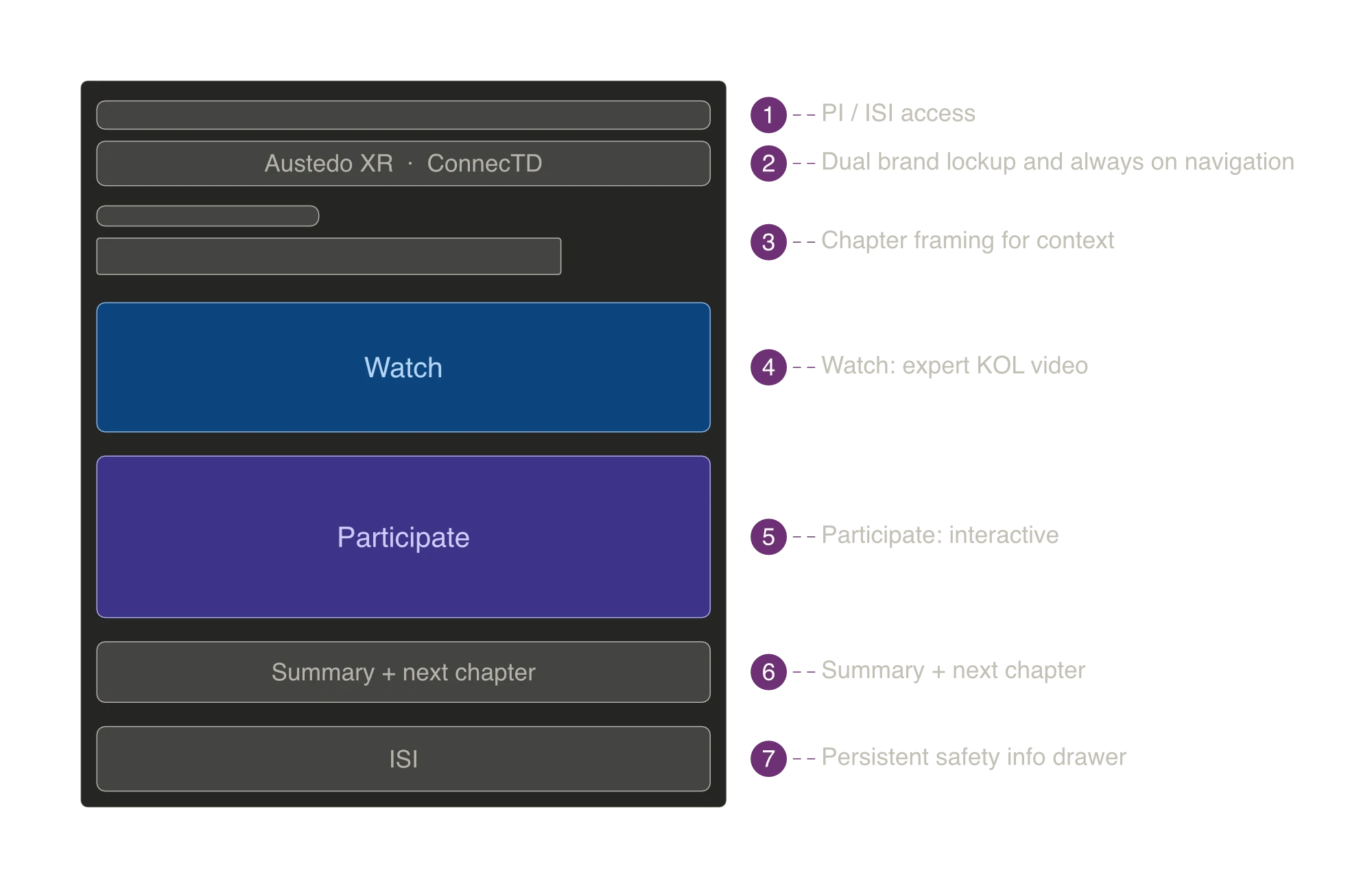
Regulatory rigor that stays out of the way. Required safety information is always present, never the obstacle.
Status
Live since August 2024 on Teva's Austedo HCP site, where it's still in market today. All four modules shipped. Screening & Assessment, DIP vs TD, Impact of TD, and Case Studies, including the AIMS practice exam, the PerfecTD quiz, and all four patient journeys.